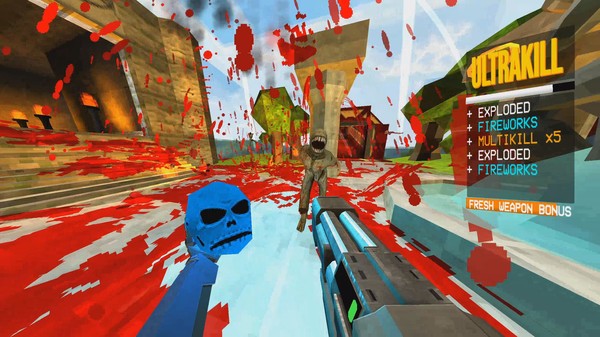
Earn a first P-rank and diagnose a missing S
Use the separate time, kills and style results to turn a completed Prelude stage into a repeatable perfect run.

- 1:48Below the two-minute target.
- Two killsBoth required Cerberi are accounted for.
- 2,900 styleChange the encounter for 300 more style.
Read the three result grades separately
Pick a short Prelude stage you have already completed. Finish once without restarting and look at the separate time, kills and style grades on the result screen. A P requires S in all three and a run with no restarts. Record the weakest column and the gap from your successful attempt before changing your route. A long secret excursion can make a fast combat sequence look slow, while bypassing an optional encounter can produce a quick time with an inadequate kill total.
Map the encounters before running fast
On a reconnaissance pass, walk the complete main route and check the side spaces where doors or enemy spawns react to your movement. Keep track of which rooms close around V1 and which allow you to leave with something alive. Use rooms or landmarks as a checklist. If the ending count is one short, knowing which room you left early gives you a testable explanation. Searching the entire stage again at speed usually repeats the same omission.
Build a finishable route before raising style
Use the loadout you can navigate without stopping at a terminal. Choose in advance what you will use against the first cluster and which option you will switch to when a different target appears. ULTRAKILL rewards varied actions, and the freshness system affects the style earned with an overused weapon. A run built entirely around a familiar firing pattern can clear rooms quickly while falling short on style. Change the way you finish a known encounter and compare its contribution.
Convert enemy placement into score
Pick a room that reliably places familiar enemies close together. Try a different interaction there, such as a projectile parry with the Feedbacker or a Marksman coin shot if that variant is available. Practice it on a non-ranking attempt first. Watch both the style callout and the time spent setting it up. A technique that takes several retries each time may improve the score column while costing enough seconds to lose the time grade on an otherwise clean run.
Use secrets on their own pass
Learn where the exit is before pursuing secret orbs and challenges. P-ranking and finding secrets are separate objectives, so a pickup is worthwhile during the ranking attempt only if its route also helps you meet a required grade. Mark the point where you can leave the main line and return later. If your kill count is already sufficient, do a timed run with the detour removed to see how much extra room the shorter route gives your combat decisions.
Handle checkpoints correctly
A checkpoint restart lets you practice a difficult room efficiently. Keep doing that until the route through it works, then begin the full level again for the actual P attempt. Receiving three S grades after a restart can still leave the final rank below P. If the three columns all look correct, check this condition before hunting nonexistent enemies or trying to beat your best time. Going back to the start for a fresh run also resets the encounter sequence.
Choose the next change from the results
When time alone is short, look for backtracking, hesitant exits and rooms where you waited for a distant target. When kills alone fail, follow the checklist and inspect optional spawns. When style alone fails, vary one dense encounter and leave traversal unchanged. After a success, repeat once with the same route before moving on. Repeating the stage helps distinguish an intentional room clear from a stray enemy that happened to wander into range on the first run.
Read a 0-5 Cerberus result without searching for secret enemies
Prelude stage 0-5 puts a precise boundary around the ranking problem. Its listed S thresholds are two minutes, two kills and 3,200 style on the standard scoring table. Suppose the result shows 1:48, two kills and 2,900 style after a clean run. There is no missing room of enemies to find in this boss arena. Keep the successful route and work on roughly 300 additional style during the Cerberi encounter while preserving the twelve-second margin. If a later attempt shows three S grades after a checkpoint retry, return to the level start for a clean run. Check the thresholds for your own difficulty before applying these numbers to a different ruleset.
Official screenshots