Build a White Stake deck that can clear eight antes
Plan a normal run around repeatable hands, the order in which Jokers score, and the boss effect already visible on the blind-selection screen.
Read all three blinds at the start of the ante
Open the blind selection screen and inspect the Boss Blind before committing your money. Small and Big Blinds mainly test how much your build scores; a boss can change which cards or hands function. Decide which hands you can produce repeatedly with the deck you actually have. A rare Straight Flush that would win on the spot is a poor answer when the next few draws cannot build it and you have little money to improve the deck.
Separate base Chips from Mult
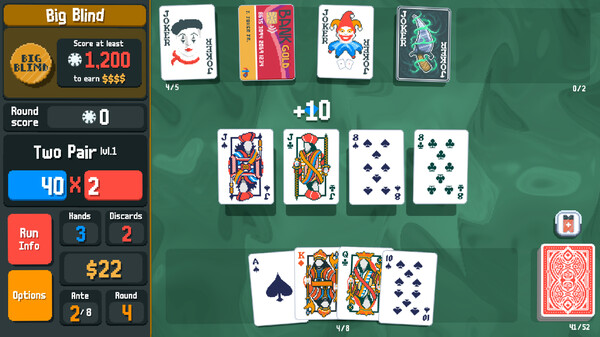
A hand scores from Chips multiplied by Mult. Check the hand preview to see what pattern the game recognizes before submitting it. When you play a Pair alongside three unpaired cards, normally only the pair contributes individual card scoring. The extra cards can still help cycle unwanted ranks out of your hand. Watch which cards visibly trigger during scoring. This distinction matters when you expect an enhancement on an unrelated card to make up a missing chunk of score.
Buy an early Joker for the shortfall you have
Play an early blind and look at the score of a typical hand before buying an expensive shop item. A flat Mult Joker can make weak early hands playable immediately. Chip support is particularly helpful when Mult has already grown and adding a few points to its other factor gives a smaller return. Compare outcomes using your actual numbers. At 50 Chips and 8 Mult, an extra 20 Chips adds 160 points, while 4 more Mult adds 200.
Put independent Mult effects in the right order
For Jokers whose effects trigger in the ordinary left-to-right Joker phase, arrange flat additions to Mult before effects that multiply the running total. Starting from 10 Mult, adding 4 and then doubling produces 28. Doubling first and adding 4 produces 24. Drag a Joker to its new slot before playing the hand. Some effects trigger on scored cards or on cards held in hand instead, so read the trigger text before treating this ordering rule as universal.
Make each discard aim for something specific
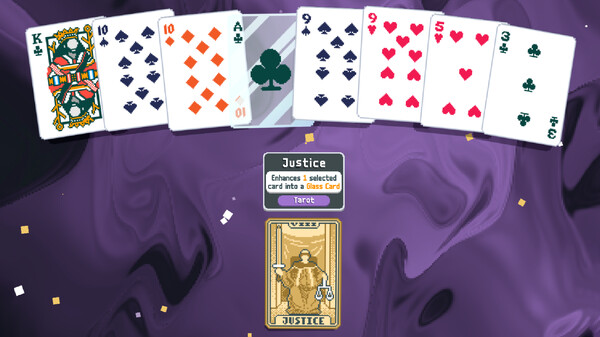
Count the cards you need for the most likely successful hand. If you already hold four cards of a suit, a discard can pursue the flush while keeping those four. If your build rewards Pair and a playable pair is already in hand, spending every discard on a stronger poker pattern may only throw away flexibility. Use a Planet card for a hand you can keep making. Raising an unused hand type gives its points to the wrong pattern.
Protect your economy without losing a blind
On the standard rules, interest pays one dollar per five dollars held, up to the ordinary cap. Money preserved through an easy round can fund more useful purchases later. Before paying for a reroll, compare it with spending on a visible improvement or simply keeping the cash. Spend more aggressively if your usual hand already fails the next target. Saving for maximum interest is a losing bargain when it prevents you from reaching the payout screen at all.
Test the build against the boss rule
The Psychic requires playing five cards, so a Pair build can submit its two scoring cards with three extras. The Needle limits you to one played hand; use your available discards to assemble your best result before committing. Other bosses debuff a particular suit or alter the value of your existing plan. Read the actual effect each ante rather than preparing for a specific boss by habit. Clear the Ante 8 boss to secure the normal win; endless play is optional.
Official screenshots